 Valusaur
Pokemon Error Cards: Which Misprints Are Worth Money

Pokemon Error Cards: Which Misprints Are Worth Money
Most odd-looking Pokemon cards are just damage, but a genuine factory error can add anywhere from a couple of dollars to five figures on top of the card's normal value. The rule of thumb: dramatic, obviously-made-at-the-printer flaws on popular or vintage cards command a premium, while minor off-centering, scratches, and edge wear only cost you money. This guide sorts the real errors from the worthless damage and puts a 2026 value range on each.
What counts as a real Pokemon error versus just damage?
A real Pokemon error happens at the printer, before the card is sealed in a pack: a miscut, a crimp from the packing machine, ink or holo that landed in the wrong place, or a back that belongs to another card. Damage happens after: scratches, dents, whitening, and wear from handling. Errors can add value because they are rare and permanent. Damage almost always subtracts it.
The dividing line collectors use is simple. If the flaw was baked into the printed sheet or the pack-sealing line, it is an error. If it came from a binder, a backpack, or a thumbnail, it is a condition problem.
Severity matters too. Card Codex notes that a plain off-center card often sells for less than a properly centered copy, while the more extreme and deliberate-looking the miscut, the more collectible it becomes. Cards N Packs frames the same rule bluntly: minor print flaws reduce value, but clear, dramatic errors can increase it significantly.
How much are Pokemon error cards worth in 2026?
In 2026, a Pokemon error card is worth its normal market value plus an error premium that ranges from a couple of dollars for a common crimp, to roughly $10-30 for a minor miscut, to $200-800 for an extreme modern miscut, and up to $500-$5,000 or well beyond on a vintage Wizards of the Coast holo. The base card's value sets the floor; the error is a premium on top.
Here is the error-type value table, drawn from current guides and sales. Ranges assume a mid-value card; multiply up for a Charizard, down for a filler common.
| Error type | What it looks like | Modern card premium | Vintage WOTC holo | How it grades |
|---|---|---|---|---|
| Minor miscut / off-center | Border thin on one edge, 2-3mm shift | ~$10-30 (often $0) | Modest; plain off-center can sell below a centered copy | PSA "OC" qualifier |
| Extreme miscut | A second card's art visibly bleeds in | $200-800 | $1,000-$10,000+ (square-cut Base Set holos) | PSA "MC"; CGC Miscut / Error |
| Crimp | Toothed indent from the pack sealer | ~$2-10 (1.5x-3x base) | $500-$5,000+ on 1st Edition holos | CGC variant field; PSA often treats as damage |
| Holo bleed | Foil spills into non-holo areas | A few dollars | $50-$500+ (more bleed = more value) | CGC "Error"; PSA normal grade |
| Missing / ghost holo | Holo layer partly or fully absent | $10-100 | $200-$2,000 (Base Set Charizard, four-five figures) | CGC "Error" |
| Ink / texture / wrong symbol | Color miss, wrong texture, wrong energy icon | $250+ on chase cards | Varies widely by card | CGC "Error"; PSA normal grade |
| Wrong back / dual front | Back or front of a different card | Very rare | $2,000-$20,000+ | Usually slabbed "Authentic" |
Sources: modern extreme-miscut and Evolving Skies figures and the EUR bands (minor miscut ~EUR20-100, extreme miscut EUR200-1,500, holo bleed EUR50-500, missing ink partial EUR100-800 and complete EUR500-3,000) come from Cards N Packs; vintage ranges from Misprint; crimp multipliers from Get Graded; grading labels from Going Twice. All accessed July 2026.
Because everything keys off the base card, pricing an error is a two-step job: value a normal copy first, then size the premium. A scan-based tool like Valusaur pulls the base card's current market value, so you are adding the error premium on top of a real number instead of guessing at both at once.
Which errors are worth more on vintage than modern cards?
Vintage errors from the 1999-2003 Wizards of the Coast era command far higher premiums than modern equivalents, because print runs were smaller, the memorable mistakes are older, and the surviving population is tiny. A crimp on a 2020 promo is background noise. A crimp on a 1st Edition holo, per Misprint, can be a $500 to $5,000-plus card.
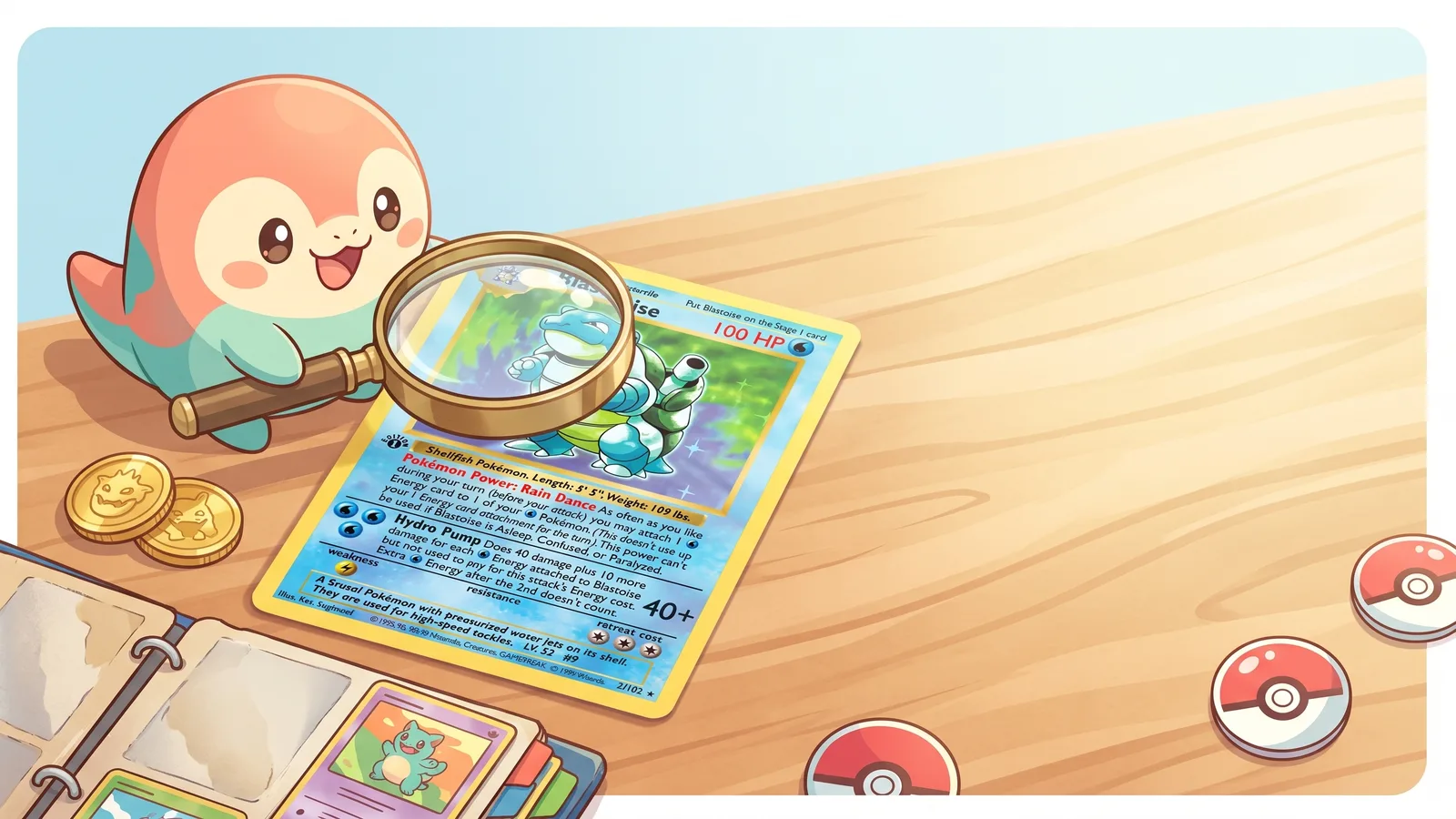
The vintage ceiling is genuinely high. Misprint documents square-cut Base Set holos starting near $1,000 and exceeding $10,000, no-set-symbol Jungle and Fossil holos at $500-$1,500 near mint, missing-holo Wizards cards at $200-$2,000 (with a Base Set Charizard variant reaching four to five figures), and wrong-back or dual-front cards from $2,000 to well over $20,000. The extreme case sits even higher: a Base Set Blastoise test print carried on a Magic: The Gathering card back, one of only three known Magic-back copies left over from Wizards of the Coast's late-1990s trials. A CGC 6.5 example sold for $216,000 at Heritage Auctions in November 2021.
Modern errors can still spike, but they lean on hype. When Evolving Skies launched, miscut sheets revealing adjacent cards sold for $200-$800 on eBay within days, per Cards N Packs. More recently, Poke Insider reported in November 2025 that Mega Charizard X ex cards from Japan's MEGA Dream ex set were printed with a texture layer meant for the Traditional Chinese release; error copies traded near ¥41,000 (about $262) against ¥4,500 (about $29) for correct ones, a seven-to-ten-times premium on a card released November 28, 2025.
Will PSA or CGC grade my error card?
Both PSA and CGC will grade a genuine factory error, but they label it very differently, and that label drives the resale price: PSA appends a letter qualifier such as MC or OC to the numeric grade, while CGC adds a dedicated "Error" designation that frames the flaw as a feature rather than a defect. In practice, PSA's qualifier works like an asterisk, so "MINT 9 (MC)" means the card would have graded a 9 if not for the miscut. Going Twice notes PSA automatically applies Marks (MK) and Miscut (MC), while Off-Center (OC), Staining (ST), Print Defect (PD), and Out of Focus (OF) are optional at submission.
That qualifier is a double-edged sword. Because PSA's codes are inherited from sports cards, where a miscut is purely a detractor, a qualified slab often reads to buyers as "a 9 with an asterisk" and resells well below a clean 9.
CGC takes the opposite stance. Going Twice reports its Error holder carries a fuller explanation on the back of the label for an extra $5 per card, and it ranks miscuts as minor, miscut, or major. For that reason, most dedicated misprint collectors prefer CGC's framing, which treats the flaw as the whole point rather than a demerit. Truly wild factory errors that cannot be scored on centering, such as blank fronts or full wrong-backs, are typically encapsulated as "Authentic" without a number. This is a real hobby, not a fringe one: the Pokemon Card Report highlights the "Gotta Misprint 'Em All" community, which has more than 20,000 members hunting these cards.
How do I figure out my error card's real value?
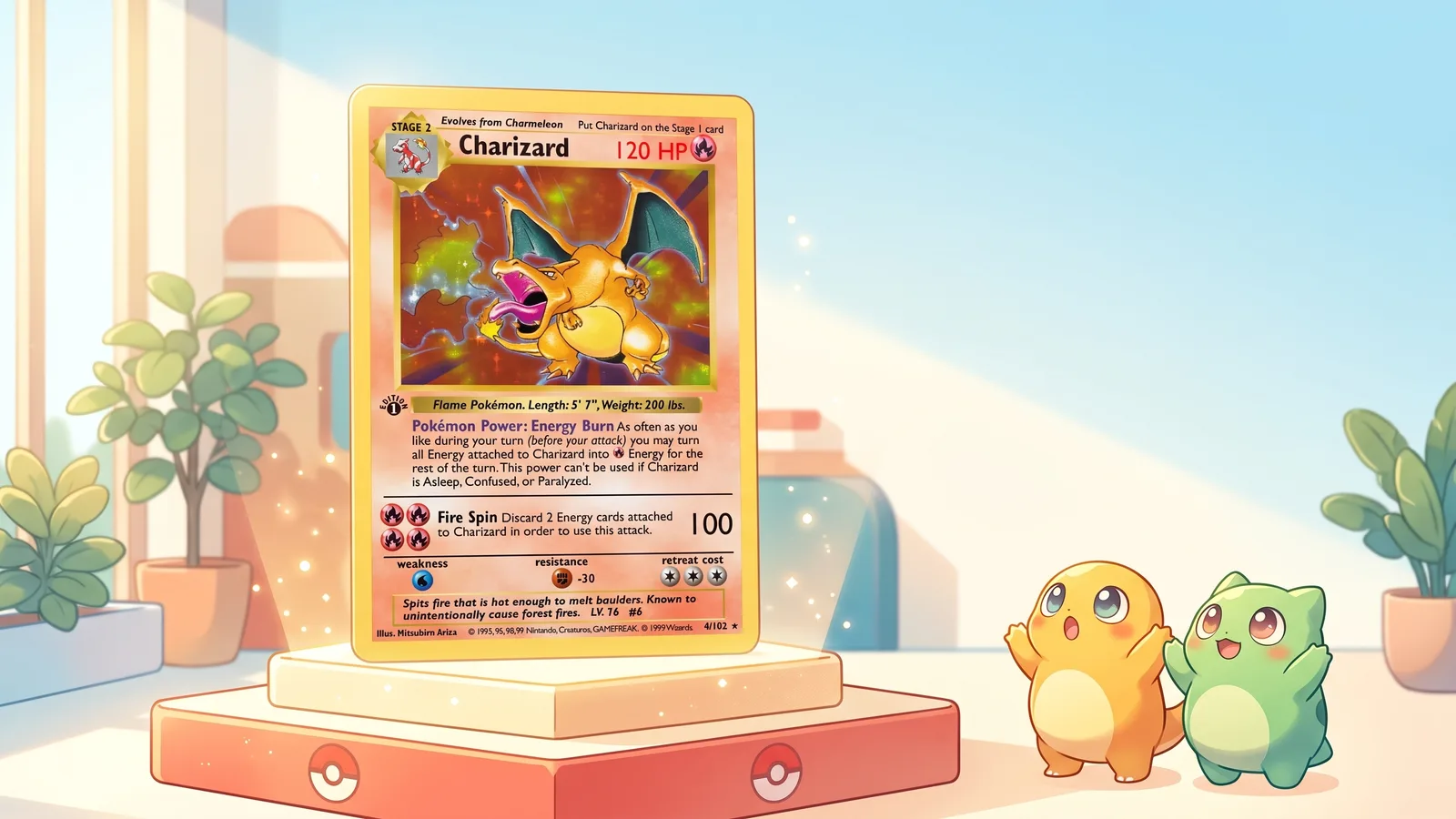
To find an error card's real value, start from the base card rather than the error: identify the exact card, set, and rarity, pull the current market price for a clean copy, and then treat the error as a premium layered on top of that floor rather than a standalone figure. A crimped bulk common stays a bulk common. A crimped 1st Edition Charizard is a different universe.
Work it in this order. First, identify the card, set, and rarity, then pull the current market price for a clean copy. Valusaur's scanner does this from a photo, and you can see how it works on the feature walkthrough. Second, judge the error: how dramatic, how visible, vintage or modern. Use the table above to pick a premium band. Third, decide whether grading pays for itself. If the base card is cheap, a CGC Error slab may cost more than the bump it adds. If it is a vintage holo, authentication is what unlocks the premium. Logging both the base value and the error note in your collection tracker keeps the two numbers separate so you always know which one is doing the work.
FAQ
Are miscut Pokemon cards worth more than normal ones?
Only when the miscut is extreme. A slight off-center card usually sells for less than a centered copy, but a miscut dramatic enough to reveal part of an adjacent card can add $200-800 on a modern chase card and far more on vintage holos. Popularity of the Pokemon matters as much as the error itself.
Does a crimped card lose all its value?
No, but on modern cards the premium is tiny, often just a dollar or two, because crimps are common factory mishaps from the pack-sealing machine. On vintage 1st Edition holos, Misprint reports crimped examples reaching $500-$5,000 depending on severity. PSA frequently treats a crimp as damage, so CGC's Error label tends to serve these cards better.
How do I know if my card is an error or just damaged?
Ask when the flaw happened. Errors originate at the printer, before packing, and include miscuts, crimps, misregistered ink, holo bleed, and wrong backs. Damage such as scratches, creases, and whitening happens after the pack is opened. Errors are permanent and repeatable across a print run, while damage is unique to your copy and only lowers the grade.
Which Pokemon errors sell for the most money?
Wrong-back and dual-front cards top the everyday list, ranging from $2,000 to over $20,000, per Misprint. One-of-a-kind vintage test prints go far higher: a Base Set Blastoise on a Magic: The Gathering card back sold for $216,000 at Heritage Auctions in 2021. Square-cut and missing-holo vintage holos also reach five figures, while modern errors rarely match any of this unless they hit a Charizard during a set's launch hype.
Will PSA or CGC authenticate any error card?
Both authenticate genuine factory errors, but label them differently. PSA adds letter qualifiers like MC or OC to the numeric grade, while CGC applies a dedicated "Error" designation for about $5 extra and ranks miscut severity. Cards too wild to grade on centering are usually slabbed "Authentic." Most error collectors favor CGC's framing.
Sources
- Pokemon Error Cards and Misprints: The Complete Guide - Cards N Packs
- The Most Valuable Misprint and Error Pokemon Cards Ever Sold - Misprint
- Card Grading Qualifiers & Errors - Going Twice
- Common TCG Errors That Increase Card Value - Get Graded
- Swirls and Crimps - Pokemon Card Report
- Extremely Rare CGC-certified Test Print Blastoise Realizes Over $200,000 - CGC
- MEGA Dream ex Texture Error Creates Unexpected Opportunity - Poke Insider
- What Are Miscut Pokemon Cards & Are They Worth Anything? - Card Codex
Wondering what your own cards are worth?
Download on the App Store