 Valusaur
How Much Are My Pokémon Cards Worth? Check in Minutes
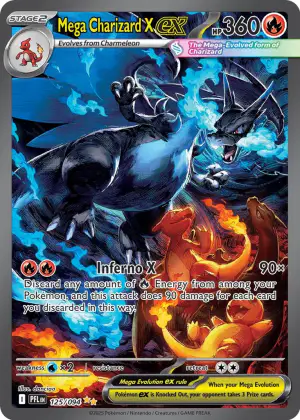
Most Pokémon cards in a shoebox are worth pennies — commons and uncommons sell for roughly $0.02 to $0.05 each in bulk, and non-holo rares aren't much better at $0.10 to $0.25 (Misprint, 2026). But real value follows visible patterns you can check in minutes: rarity symbol, variant type, set and era, condition, and whether grading makes sense. Here's how to sort your stack.
The 5 things that actually drive value
Before you look up a single price, check these five factors. They explain almost all the difference between a $0.05 common and a $500 chase card.
1. Rarity symbol. Every card has a small icon near the set number (bottom corner) that tells you its print rarity. A black circle means common, a black diamond means uncommon, and a black star means rare (CGC, 2026). Since the Scarlet & Violet era, five more tiers were added to separate "rare" into meaningful bands: two black stars for double rare, two silver stars for ultra rare, one gold star for illustration rare, two gold stars for special illustration rare, and three gold stars for hyper rare (CGC, 2026). A gold-star card is almost never bulk.
2. Variant type. The same Pokémon printed in the same set can carry wildly different values depending on the print run. Holofoil cards shine only inside the art box; reverse holos shine everywhere except the art box. 1st Edition cards carry a dedicated 1st Edition stamp, and Base Set's earliest print run is "shadowless" — it's missing the drop shadow around the art box that later prints have — both of which command a premium over standard copies (CGC, 2026). Illustration rares and alt-art cards, which swap the standard layout for full-card artwork, are their own high-demand category regardless of the Pokémon featured.
3. Set and era. Vintage cards (1998–2003 Base Set through e-Card era) carry scarcity that modern cards structurally can't match, since print runs were smaller and far more copies have been lost to decades of play and storage. Modern chase cards can still hit four figures, but they depend on pull rates and hype cycles rather than age.
4. Condition. A mint-condition common is still a common, but a played-condition rare can lose most of its value. Standard grading language: Near Mint keeps 100% of value with sharp corners and no visible wear; Lightly Played (75-90% of value) shows minor edge wear and barely-visible surface scratches; Moderately Played (50-75%) has noticeable corner rounding and visible scuffing; Heavily Played (25-50%) shows heavy corner damage and major scratching; Damaged (10-25%) has creases, tears, or water damage (PokeScope, 2026). One bent corner can drop a card an entire condition tier.
5. Grading. Getting a card professionally graded doesn't change what it is, but it verifies condition and authenticity in a way that materially changes what buyers will pay — especially at the high end. More on when that's actually worth doing below.
Quick self-triage checklist
Go through your stack once with this list. Anything that hits two or more of these is worth pulling and pricing individually rather than dumping into a bulk lot.
- Holo shine in the art box only (not full-card) → basic holo rare, check individually
- Full-card holographic foil or textured finish → likely an ultra rare, illustration rare, or higher tier
- Gold stars near the set number (one, two, or three) → illustration rare, special illustration rare, or hyper rare — always worth pricing
- A small "1st Edition" stamp on the left side of the art box → vintage premium, don't sell as bulk
- No drop shadow around a Base Set art box → possible shadowless print, worth a closer look
- "PROMO" printed next to a black star → promotional card, value varies widely by event
- Full-art or "alt-art" illustration replacing the normal card layout → collector-demand card regardless of the Pokémon
- Sharp corners, no whitening, no scratches → condition supports a real grading conversation if the card also clears the rarity checks above
Cards that pass none of these checks — plain circle or diamond rarity, standard layout, visible wear — are bulk, and bulk really is worth close to nothing individually: mixed commons and uncommons run about $15-40 per 1,000 cards depending on how they're sorted (Misprint, 2026). The fastest way to run this checklist across a full binder is to scan each card with Valusaur — it identifies the exact set, variant, and rarity automatically and pulls live TCGplayer and Cardmarket prices instead of you eyeballing symbols one at a time.
What to do with the winners
Once you've isolated your candidates, here's the decision path.
| Situation | What to do |
|---|---|
| Raw value under $50 | Sell raw. Grading fees rarely pay back on lower-value cards. |
| Raw value $50+, corners/surface look near-mint | Consider grading — a PSA 9-to-10 jump can multiply value 2-10x on the right card. |
| Vintage 1st Edition holo, strong centering | Strong grading candidate — a 1st Edition Charizard can jump from roughly $5,000 at PSA 9 to $40,000+ at PSA 10. |
| Modern alt-art or illustration rare in mint shape | Consider grading — some modern alt-arts appreciate 10-20x raw price at a PSA 10 (SnapGradeAI, 2026). |
| Any card with visible damage | Sell raw or keep for nostalgia — grading won't recover the cost. |
The grading math, concretely. PSA's base "Value" tier runs about $25 per card, but once you add membership, shipping, and supplies, all-in cost per card is closer to $35 (SnapGradeAI, 2026; PokeCardFinder, 2026). CGC and BGS sit in a similar range: CGC's Standard tier is about $20 for cards up to $250 in value, and BGS Standard is about $30 for cards up to $499 (PokeCardFinder, 2026). The rule of thumb worth remembering: if the raw card is worth less than $50, grading rarely pencils out, and you should expect roughly 30% of submissions to come back at grade 7 or 8 — a result that usually doesn't clear the fee (SnapGradeAI, 2026).
Population also matters after the grade comes back. A PSA 10 with a population of 5 is worth far more than a PSA 10 with a population of 5,000 — Evolving Skies' Umbreon VMAX Alt Art is the cautionary example, with PSA 10 population exceeding 3,000 copies and prices falling 30-40% through 2025 as the pop count grew (PokemonPriceTracker, 2026). Before submitting anything, check the card's existing PSA population — a scarce card in a scarce grade is where grading actually pays.
If you're not sure whether a specific card clears the $50 raw-value bar, that's the first thing to check, not the grading company. See our Pokémon card value checker guide for how to pull a live market price across TCGplayer and Cardmarket before you spend anything on submission fees.
Vintage vs. modern: where the real money sits
It's tempting to assume "old = valuable," but that's only half true. Age creates scarcity, but scarcity alone doesn't guarantee demand — plenty of vintage commons are still bulk. What separates real value from nostalgia:
- Vintage winners are usually 1st Edition or shadowless Base Set through Neo era holos and rares, particularly Charizard, Blastoise, and other era-defining Pokémon in strong condition.
- Modern winners are almost always alt-art, illustration rare, special illustration rare, or hyper rare pulls from current-era sets — the standard-layout version of the same Pokémon in the same set is usually worth a fraction of the alt-art.
- Both eras reward condition disproportionately. A worn vintage rare and a worn modern chase card both lose most of their premium the same way.
If you've got a mixed collection spanning decades, sort it by era first, then run the rarity-symbol and variant checks within each era — vintage commons and modern commons both sort into bulk regardless of age.
FAQ
How can I tell if my Pokémon card is a reprint or the original valuable version? Check the set symbol and card number against the original print (available on Bulbapedia or PokemonCard databases), and check for a 1st Edition stamp or shadowless art box on Base Set cards specifically — reprints lack both (CGC, 2026).
Does a holo card always mean it's valuable? No. Holo just means the art box has holographic foil, which typically maps to "rare" rarity — a step up from common or uncommon, but far below illustration rares, special illustration rares, or hyper rares that use gold-star symbols (CGC, 2026).
Is it worth grading a card I think is only worth $30? Usually no. Grading fees run about $25-35 all-in even at the cheapest tier, so a $30 raw card would need to jump multiple grade points in value just to break even, and roughly 3 in 10 submissions come back at a 7 or 8 that won't clear the fee (SnapGradeAI, 2026).
What's the fastest way to check my whole collection at once? Scan each card with an app that reads the exact set and variant rather than relying on rarity symbols alone. Valusaur's scanning feature does this and returns live TCGplayer and Cardmarket prices per card, plus price history, so you're not manually cross-referencing symbols against a price guide.
Should I sell bulk cards individually or as a lot? As a lot, almost always — pulling and listing individual commons rarely covers the time cost. The exception is any card that scans at $1 or more; pull those out first, since even a small number of $1-5 cards can be worth more than the remaining thousands of commons combined (Misprint, 2026).
Sources
- Understanding Pokémon Rarity Symbols and Card Features | CGC
- Pokemon Card Population Report Guide: Rarity Analysis 2026 | PokemonPriceTracker
- Pokemon Card Condition Guide - NM, LP, MP, HP Grades Explained | PokeScope
- Pokemon Card Grading Cost: PSA, CGC & BGS Fees 2026 | PokeCardFinder
- What Are Bulk Pokemon Cards Worth in 2026? | Misprint
- Is Pokémon Card Grading Worth It? (2026 Decision Guide) | SnapGradeAI
Wondering what your own cards are worth?
Download on the App Store